


Easter Cookies always seem simple until you’re staring at a sticky bowl of dough and wondering why the bunnies look like tiny melted snowmen. If you’ve ever battled spreading cookie shapes, icing that won’t set, or sprinkles that go everywhere, you’re in the right place. I’ve baked more batches than I can count, and along the way I’ve figured out how to get tender, lightly crisp cookies that hold their shape and take on icing like a dream. The best part is you don’t need fancy skills, just a few smart moves. Let me walk you through my exact approach so you can bake with confidence and have a little fun too.

Overview of Easter Cookies
These are the cookies I pull out when family starts asking for something cheerful. Think buttery, vanilla sugar cookies that keep their edges, topped with a gentle layer of icing that dries smooth and pretty. The flavors are classic so you can go wild with color and decorations. And yes, they freeze well, so you can bake ahead without stress.
When I say easy, I mean it. We cream butter and sugar, add egg and vanilla, stir in flour, chill the dough, then roll it out and cut shapes. I like bunnies, eggs, carrots, and flowers. If you’re cooking with kids, do smaller shapes because they bake evenly and decorate faster. If you’re baking solo, go with medium shapes for cleaner lines.
What makes these cookies so reliable
Two things: dough consistency and chill time. The dough should be soft but not sticky. If it clings to your fingers, add a tablespoon of flour at a time until it’s manageable. Chilling is non-negotiable. It firms up the butter so your cookies hold those cute edges. I chill the dough at least one hour, and if my kitchen is warm, I chill the cut shapes for 10 minutes on the baking sheet before the oven. You’ll see a difference after the first batch.
These are classic cut-out cookies, but you can easily add lemon zest, almond extract, or a hint of cinnamon without throwing off the texture. For the icing, I usually do a simple royal icing or a thick glaze. Both give a clean finish and take sprinkles like champs.
If you’re planning your timeline, bake the cookies a day ahead, then decorate the next day when you’re not in a rush. You’ll enjoy the process more. This plan also helps with color bleeding since the cookies are fully cooled and slightly dried out on the surface.
Key Tips for Perfect Cookies
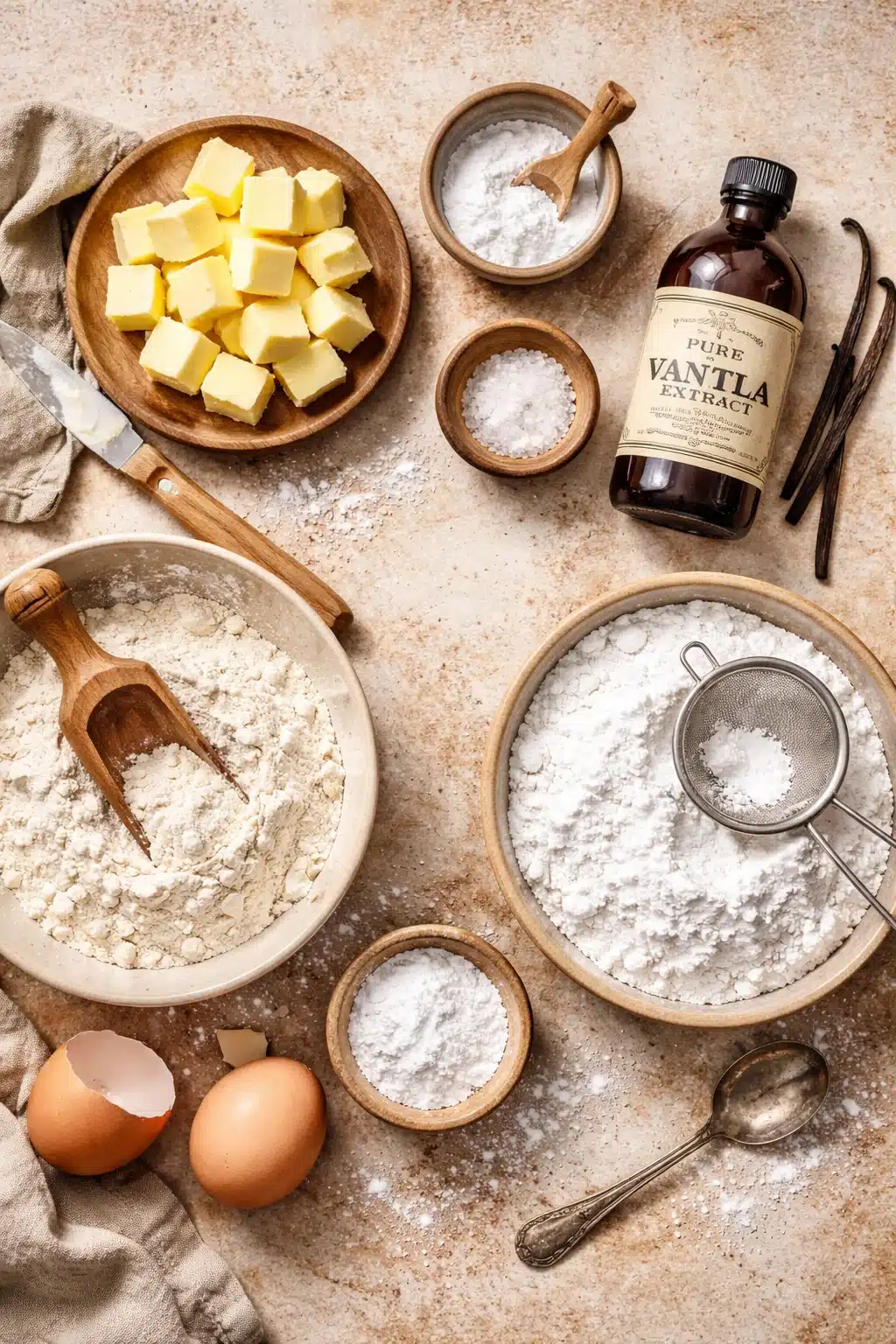
Ingredients that set you up for success
- Room-temperature butter: Press it and it should give gently. Too soft and the dough will be greasy.
- Fresh baking powder: Old leavening gives sad, flat cookies. Check the date.
- Good vanilla: Real vanilla makes a bigger difference than you think.
- All-purpose flour: Measure with the spoon-and-level method so you don’t pack too much flour.
- Powdered sugar for icing: Sift it for smooth results.
My step-by-step flow
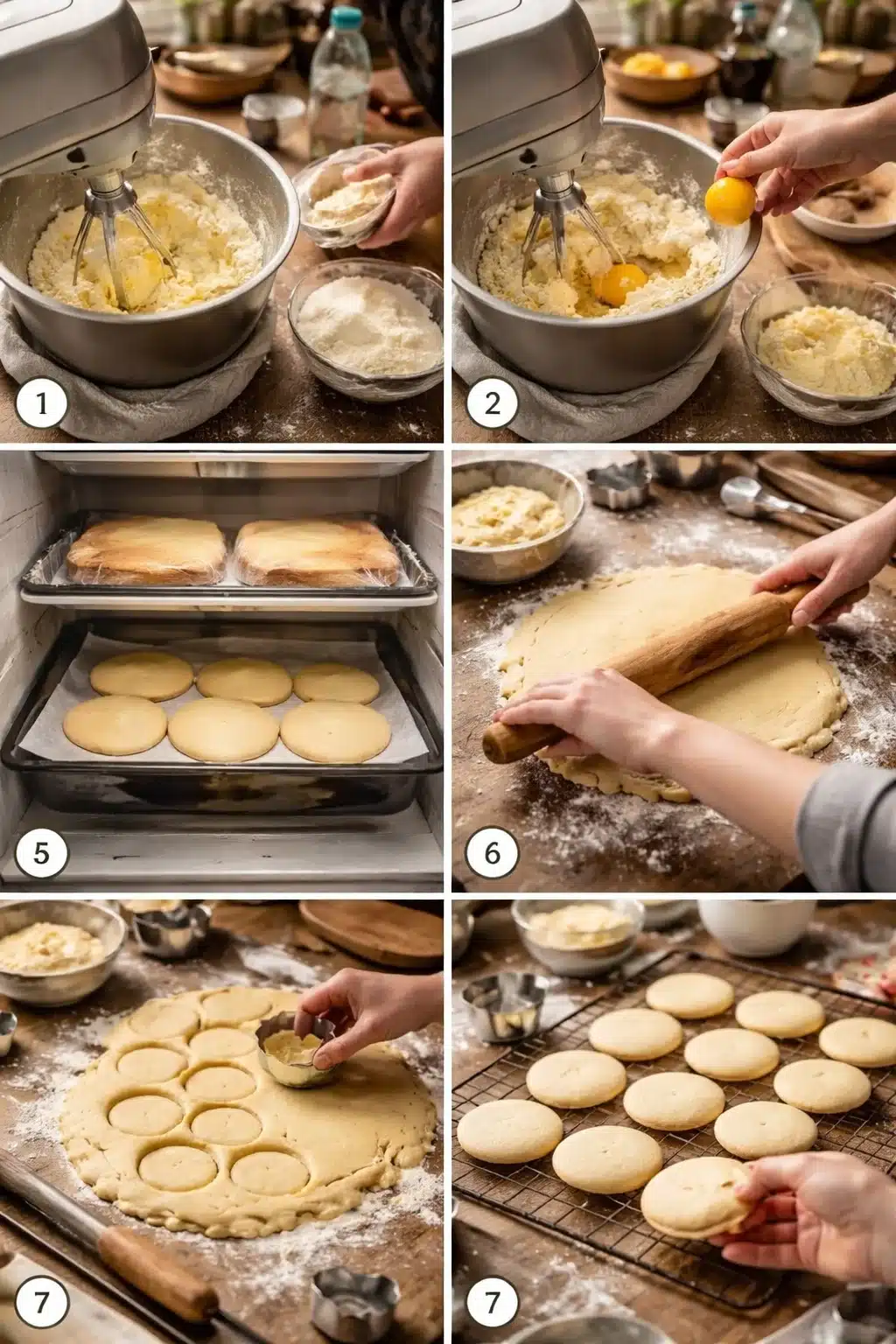
Cream the butter and sugar just until light. Don’t beat for ages. Overmixing adds air that makes cookies puff and lose shape. Mix in the egg and vanilla until combined, then add dry ingredients on low speed. Stop as soon as there are no dry streaks.
Chill the dough. Divide the dough in half, flatten into discs, wrap, and chill for at least an hour. If you’re short on time, 30 minutes in the freezer helps, but keep an eye on it so it doesn’t get rock hard.
Roll with a light dusting of flour. Too much flour can make tough cookies. I aim for about a quarter inch thickness. Thinner cookies turn crispy, thicker ones stay softer. Use parchment paper and a rolling pin with guides if you have one.
Keep shapes consistent. Bake similar sizes together so they finish at the same time. Rotate the pan halfway through if your oven runs hot on one side.
Pull them while pale and set. Look for dry edges and a matte surface. They should be pale and not browned. They continue to set on the hot sheet for a couple of minutes before you move them to a rack.
Let cookies cool fully before icing. Even a little warmth melts icing and messes with the finish.
If you follow these steps, your Easter Cookies will keep their edges and bite like a dream. The dough is forgiving, but the chill and the bake time are the big swings you can’t skip.
Icing Variations and Techniques
I use two main icing approaches depending on my mood and timing. Royal icing gives that smooth, almost glossy finish. A simple glaze is softer, quicker, and still very pretty. Both work beautifully for Easter colors.
Royal icing vs simple glaze
Royal icing: Mix powdered sugar with meringue powder and water, plus vanilla or almond extract. You want a thicker outline consistency to trace the edges, then thin it slightly with water for flooding the center. If the icing ribbon disappears back into the bowl in about 12 to 15 seconds, you’re good for flooding. Pros: dries firm, stacks well, clean look. Cons: needs a little practice.
Simple glaze: Powdered sugar, milk, vanilla, and a tiny pinch of salt. Stir until the glaze is smooth and drips slowly off the spoon. It won’t dry as hard as royal icing, but it sets enough to add sprinkles. Pros: quick, cozy, and tasty. Cons: slightly less detail.
Coloring tips: Use gel food colors for bright shades without flooding the icing with liquid. Start tiny and build up. Pastel shades are perfect for spring, so one drop can be enough. Let colored icing sit covered for 10 minutes so bubbles rise, then pop them with a toothpick before decorating.
Technique basics: Outline first, then flood. If you’re using royal icing, outline with a thicker icing to create a barrier. Flood inside with a slightly thinner icing and nudge it into corners with a scribe or toothpick. For glaze, spread gently with the back of a spoon.
Drying and storage: Let cookies dry uncovered at room temp for several hours or overnight. Humid day? Turn on a fan across the room to keep air moving. Once dry, store in a single layer or between sheets of parchment.
“I followed your outline-then-flood method and my cookies finally looked like the photos. Even my five-year-old got crisp edges. We’re making another batch this weekend.”
Once you get your icing routine down, your Easter Cookies will look bakery-level without being fussy. You’ll feel the rhythm after the first tray.
Recommended Tools for Easier Baking
You can absolutely make this recipe with basic gear, but a few tools make it smoother and more reliable. If you’re assembling a little cookie kit, here’s what I actually use on repeat.
- Half-sheet pans with parchment: Even baking and easy cleanup.
- Rolling pin with thickness rings: Helps keep all cookies the same height.
- Metal cutters: They cut cleaner edges than plastic, especially for detailed shapes.
- Offset spatula: Slides under cookies without bending them.
- Cooling racks: Essential for getting cookies off the hot pan so they don’t overbake.
- Piping bags and small round tips: For outline and detail work. If you don’t have these, snip a tiny corner off a zip bag.
- Scribe tool or toothpicks: Pokes bubbles and pulls icing into tiny corners.
- Gel colors: Bright color with a tiny drop.
Keep it simple. If all you have is a bowl, whisk, rolling pin, and a few cutters, you’re still set. The rest just makes the process calmer and quicker.
Creative Decor Ideas
This is where the fun starts. If you’ve got kids around, set out a few small bowls with sprinkles and pastel icing and let them go wild. If you’re decorating solo, try a couple of easy patterns that look impressive without a lot of effort.
Speckled eggs: Make a pale base color and let it set a bit. Mix a drop of cocoa powder with water and gently flick speckles using a clean brush. It looks fancy but it’s surprisingly easy.
Bunny faces: Flood with white, let set, then add pink ears and a tiny nose. Draw whiskers with a food-safe marker or a thin line of gray icing. A small dot of white on the eye gives that cute sparkle.
Carrot cookies: Orange base with small flicks of darker orange for texture. Top with green leaves using a star tip or little short lines in different shades of green.
Floral cookies: Use a small round tip to pipe dots in clusters for flowers. Add a few leaves around them. I like a pale base color with white flowers for a soft look.
Marble effect: Add two tiny lines of a second color on the wet base and swirl gently with a toothpick. A little goes a long way here.
If you want to make gifts, let the icing dry fully, then pack the cookies in clear bags with a ribbon. They look sweet and professional. And if you’re hosting brunch, set a plate of Easter Cookies next to coffee and watch them vanish.
Common Questions
Q: How do I keep the cookies from spreading?
A: Chill the dough and the cut shapes. Use cool baking sheets lined with parchment. Bake until just set and pale.
Q: Can I make the dough ahead?
A: Yes. Wrap the dough well and refrigerate for up to three days or freeze for up to two months. Thaw in the fridge overnight before rolling.
Q: What if my icing is too runny?
A: Add a spoonful of powdered sugar at a time and stir. If it’s too thick, add a few drops of water. Test by pulling a ribbon through it and counting how fast it disappears.
Q: Do I need meringue powder for royal icing?
A: It helps with stability and drying. If you don’t have it, try the simple glaze and let it dry longer. You’ll still get a nice finish.
Q: Can I make these gluten free?
A: Use a good 1 to 1 gluten free flour blend and add an extra tablespoon if the dough feels sticky. Chill time becomes even more important.
A Sweet Little Wrap Up
You don’t need a bakery kitchen to turn out pretty, delicious Easter Cookies. Chill your dough, keep the bake gentle, and take a relaxed approach to icing. The little details add up and your cookies will look charming on any spring table. If you try this, tag me or drop a note, because I love seeing your versions. Now grab a mixing bowl and let’s make something sweet. 

Easter Cookies
- Prep Time: 60 minutes
- Cook Time: 10 minutes
- Total Time: 70 minutes
- Yield: 24 cookies 1x
- Category: Dessert
- Method: Baking
- Cuisine: American
- Diet: Vegetarian
Description
Cheerful, buttery vanilla sugar cookies that hold their shape and are perfect for decorating.
Ingredients
- 1 cup butter, room temperature
- 1 cup granulated sugar
- 1 large egg
- 1 teaspoon vanilla extract
- 2 ¾ cups all-purpose flour
- 1 teaspoon baking powder
- Powdered sugar for icing
- Food coloring (optional)
Instructions
- Cream the butter and sugar until light.
- Mix in the egg and vanilla.
- Add the dry ingredients and mix on low speed.
- Chill the dough for at least 1 hour.
- Roll out the dough to about a quarter inch thickness.
- Cut shapes and chill again for 10 minutes if in a warm kitchen.
- Bake until pale and set.
- Let cookies cool fully before icing.
Notes
Chilling the dough and cut shapes helps prevent spreading. Enjoy decorating with icing and sprinkles!
Nutrition
- Serving Size: 1 cookie
- Calories: 150
- Sugar: 10g
- Sodium: 50mg
- Fat: 7g
- Saturated Fat: 4g
- Unsaturated Fat: 3g
- Trans Fat: 0g
- Carbohydrates: 19g
- Fiber: 0g
- Protein: 2g
- Cholesterol: 30mg