

There’s something undeniably comforting about the tangy, bold flavor of pickled eggs. These vibrant, jewel-like snacks bring back memories of family gatherings and delicious home-cooked meals. But it’s not just nostalgia that makes pickled eggs special; it’s their versatility and ease of preparation that truly elevate them to a family favorite. Making pickled eggs using apple cider vinegar is not only a fun cooking project, but it also results in a delightful treat that can be enjoyed for weeks.
At the heart of this recipe are six perfectly hard-boiled eggs, enveloped in a fragrant mixture of apple cider vinegar, water, and spices. The combination of salt, sugar, whole black peppercorns, mustard seeds, and fresh garlic transforms these eggs into a flavor-packed punch of salty, sweet, and tangy goodness. Each bite culminates in a burst of flavor that is both satisfying and refreshing.
The process to make pickled eggs is straightforward and user-friendly. All you need to do is place those hard-boiled eggs into a clean jar, cook a blend of apple cider vinegar, water, and spices until it boils, and pour this hot mixture over the eggs. After allowing everything to cool and refrigerate for a day, your pickled eggs will be ready to enjoy. Aging them for at least 24 hours allows the eggs to soak up the full flavors, making them an even more delectable treat.
These pickled eggs shine in various scenarios. Whether you’re enjoying a cozy evening at home, looking for a protein-packed snack, or preparing for a potluck, they are perfect for nearly any occasion. Their versatility means they can be served alongside a salad, as a topping for a sandwich, or enjoyed on their own as a snack.
Why You’ll Love This Pickled Eggs with Apple Cider Vinegar
- Quick and Easy: This recipe requires minimal effort and can be made in under an hour, making it ideal for busy cooks.
- Simple Ingredients: With only a handful of ingredients, you likely have most of them in your pantry already.
- Comfort Food: There’s something deeply satisfying about the taste of pickled eggs, transporting you back to simpler times.
- Long Shelf Life: Once made, you can keep these eggs in the fridge for up to four weeks, making them a great prep-ahead option.
- Versatile Usage: Pickled eggs can be enjoyed in various ways—on their own, in salads, or even as a garnish for your favorite dishes.
Main Ingredient Tips
The main star of this recipe is the humble hard-boiled egg. When selecting eggs, look for fresh, high-quality options. If possible, buy organic or free-range eggs for better flavor and texture. Fresh eggs will make for creamier yolks and more vibrant colors in the final pickled product. You can easily hard boil your eggs by placing them in a pot, covering them with cold water, bringing the water to a boil, and letting them cook for about 9-12 minutes. Once they’re done, cool them in an ice water bath to make peeling easier.
Options for Substitutions
- Vinegar Varieties: Swap apple cider vinegar for white vinegar for a milder flavor.
- Alternative Sweeteners: Replace sugar with honey or agave syrup for a different sweetness profile.
- Spice Variations: Try using dill seeds or crushed red pepper flakes for added heat.
- Garlic Alternatives: If you’re not a fan of fresh garlic, garlic powder can work as a substitute.
- Different Egg Types: Use quail eggs for a fun twist; they have a unique flavor and bite-sized appeal.
- Herb Additions: Fresh herbs like dill or thyme can be added for an aromatic touch.
Watch Out for These Mistakes
One common pitfall when making pickled eggs is overcooking the eggs. Overcooked hard-boiled eggs can result in a greenish-gray ring around the yolk, making them unappetizing and rubbery. To achieve perfect hard-boiled eggs, it’s best to place them in cold water and bring the pot to a boil slowly.
Another mistake is not allowing the vinegar mixture to cool properly before pouring it over the eggs. Hot vinegar can cause the eggs to crack, leading to leaks and affecting the pickling process. It is crucial to let the mixture cool to room temperature so that the eggs are preserved correctly.
You should also ensure the eggs are fully submerged in the vinegar brine. If they are not, you risk uneven pickling. Finally, be patient; it’s tempting to taste the eggs too soon. Allowing them to pickle for at least 24 hours will enhance their flavor significantly.
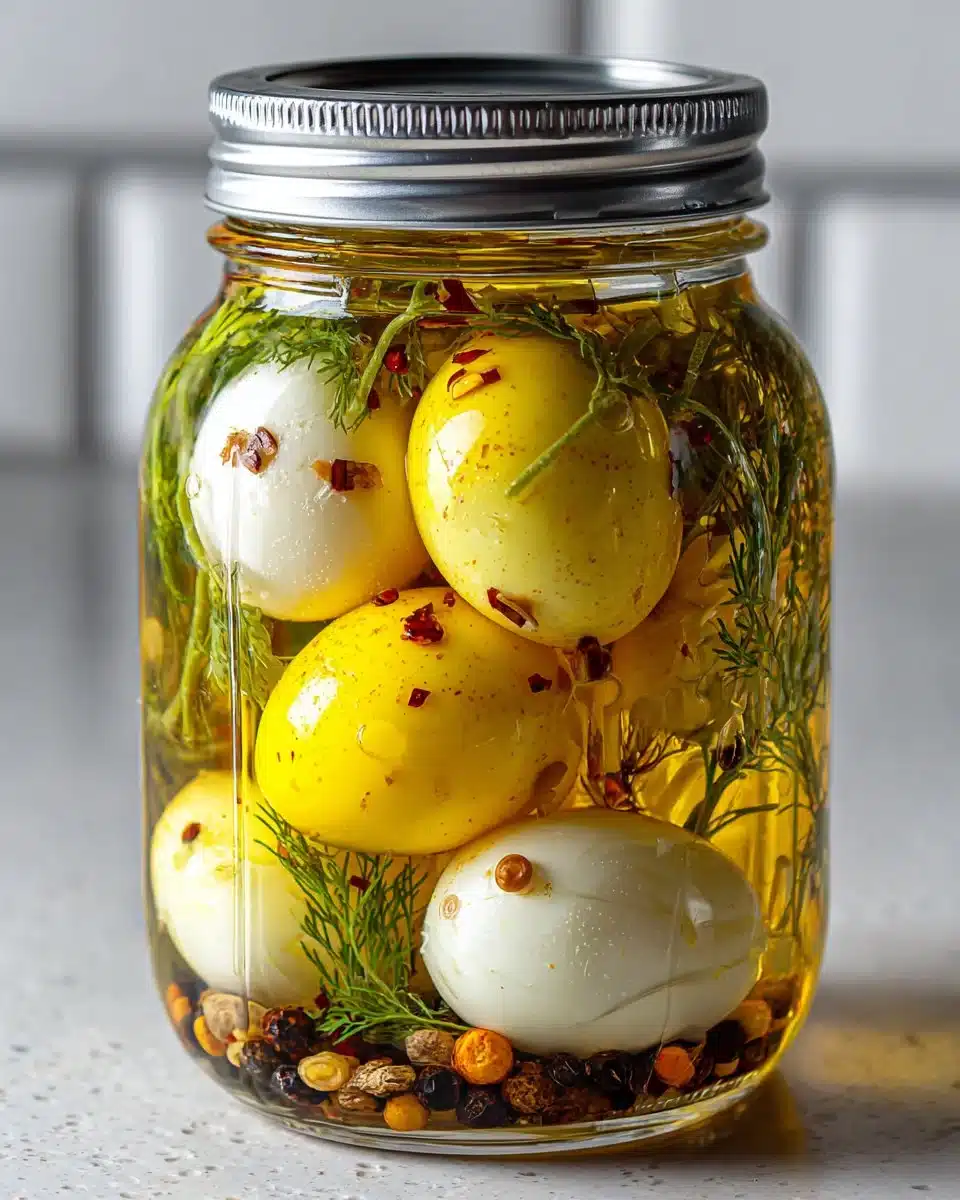
What to Serve With Pickled Eggs with Apple Cider Vinegar?
Pickled eggs pair beautifully with various side dishes. They complement a simple green salad with a tangy dressing, a hearty potato salad, or a cheese platter featuring robust, flavorful cheeses. Consider serving them alongside some whole-grain mustard and crackers for a delightful snack. They also make a great addition to a breakfast or brunch spread, alongside fresh fruits and pastries.
Storage Instructions
Store: Keep your pickled eggs in the refrigerator for up to four weeks. Make sure they are stored in an airtight container to maintain their flavor and freshness.
Freeze: Freezing pickled eggs is not recommended, as freezing alters their texture and taste.
Reheat: If you enjoy warm pickled eggs, you can reheat them gently. Heat them on the stovetop in a pan with a little water, or place them in the microwave for a short time, checking frequently to avoid overcooking.
Recipe Info
Preparation Time: 15 minutes
Cooking Time: 10 minutes
Total Time: 25 minutes plus 24 hours to pickle
Level of Difficulty: Easy
Servings: 6 servings
Estimated Nutrition
Estimated nutrition for the whole recipe (without optional ingredients):
- Calories: 480-540
- Protein: 36-42 g
- Fat: 30-36 g
- Carbohydrates: 18-24 g
Ingredients
- 6 hard-boiled eggs
- 1 cup apple cider vinegar
- 1 cup water
- 1 tablespoon salt
- 1 tablespoon sugar
- 1 teaspoon black peppercorns
- 1 teaspoon mustard seeds
- 2 cloves garlic (smashed)
Step-by-Step Instructions
Step 1: Prepare the Eggs
Start by placing the six hard-boiled eggs in a clean jar. Make sure the jar is sterilized to prevent any contamination and ensure the eggs stay fresh.
Step 2: Cook the Brine
In a saucepan, combine 1 cup of apple cider vinegar, 1 cup of water, 1 tablespoon of salt, 1 tablespoon of sugar, 1 teaspoon of black peppercorns, 1 teaspoon of mustard seeds, and 2 smashed cloves of garlic. Bring this mixture to a boil over medium heat. Stir it until the salt and sugar have fully dissolved.
Step 3: Pour the Brine Over the Eggs
Once the brine is boiling, carefully pour it over the hard-boiled eggs in the jar, ensuring that the eggs are fully submerged in the liquid. This step is crucial for proper pickling.
Step 4: Cool and Refrigerate
Allow the jar to cool to room temperature. Once cooled, cover it tightly with a lid and place it in the refrigerator. The eggs will need to sit and pickle for at least 24 hours to develop their flavor.
Step 5: Enjoy Your Pickled Eggs
After the waiting period, your pickled eggs are ready to enjoy! They can be kept in the refrigerator for up to four weeks.
Step 6: Serve and Enjoy
When you’re ready to serve the pickled eggs, simply remove them from the jar and enjoy them as a snack, in a salad, or with your favorite meal.
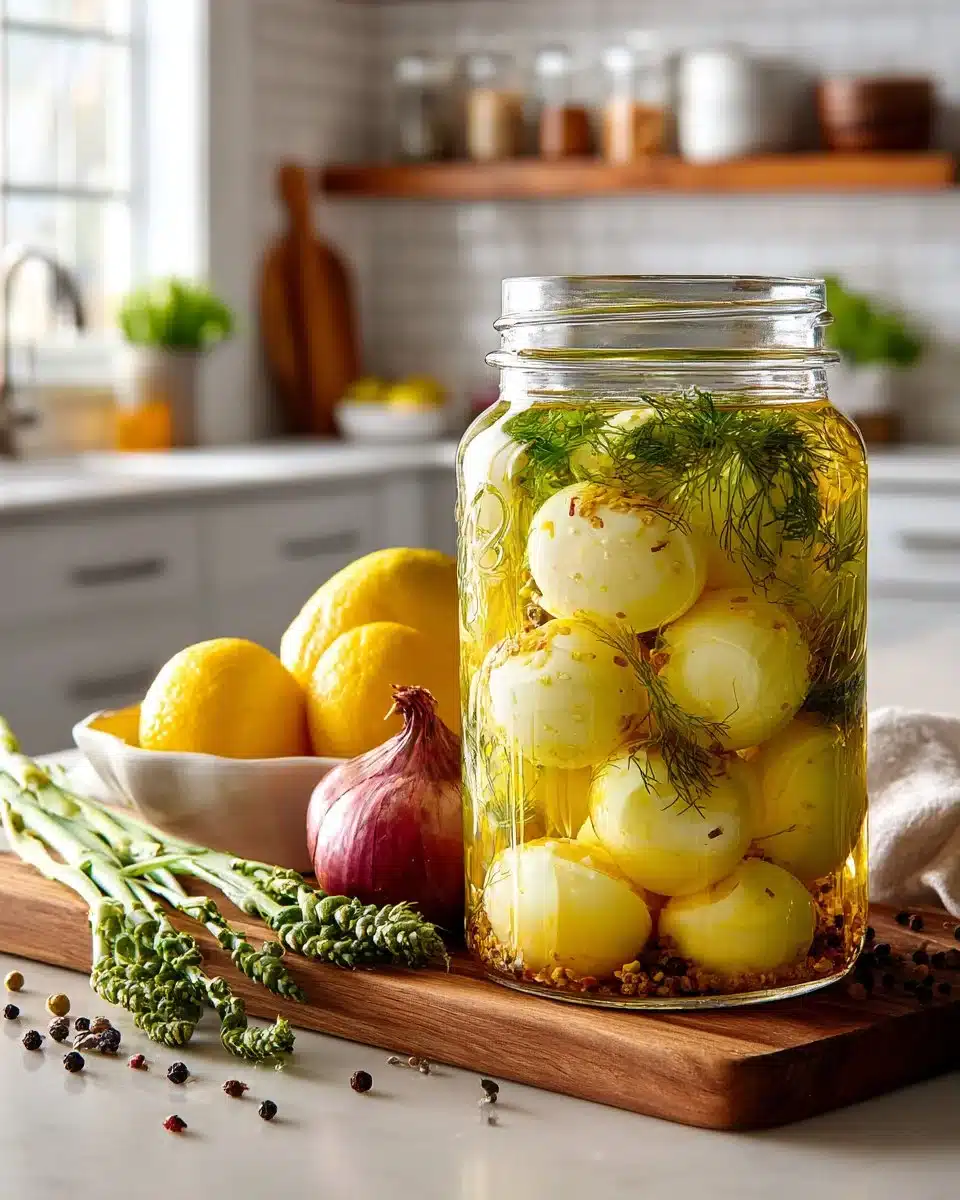
These pickled eggs with apple cider vinegar are an easy, delicious addition to your cooking repertoire. With simple ingredients and straightforward steps, you’ll be enjoying this tangy snack in no time. I invite you to try making them today. Once you’ve tasted the results, feel free to share your thoughts or explore similar recipes on my blog. Your feedback is always welcome!
Print
Pickled Eggs with Apple Cider Vinegar
- Prep Time: 15 minutes
- Cook Time: 10 minutes
- Total Time: 1,440 minutes
- Yield: 6 servings 1x
- Category: Snack
- Method: Pickling
- Cuisine: American
- Diet: Vegetarian
Description
These pickled eggs with a tangy apple cider vinegar brine are a flavorful, comforting snack that are easy to prepare and perfect for various occasions.
Ingredients
- 6 hard-boiled eggs
- 1 cup apple cider vinegar
- 1 cup water
- 1 tablespoon salt
- 1 tablespoon sugar
- 1 teaspoon black peppercorns
- 1 teaspoon mustard seeds
- 2 cloves garlic (smashed)
Instructions
- Prepare the Eggs: Start by placing the six hard-boiled eggs in a clean jar. Make sure the jar is sterilized to prevent any contamination and ensure the eggs stay fresh.
- Cook the Brine: In a saucepan, combine 1 cup of apple cider vinegar, 1 cup of water, 1 tablespoon of salt, 1 tablespoon of sugar, 1 teaspoon of black peppercorns, 1 teaspoon of mustard seeds, and 2 smashed cloves of garlic. Bring this mixture to a boil over medium heat. Stir it until the salt and sugar have fully dissolved.
- Pour the Brine Over the Eggs: Once the brine is boiling, carefully pour it over the hard-boiled eggs in the jar, ensuring that the eggs are fully submerged in the liquid.
- Cool and Refrigerate: Allow the jar to cool to room temperature. Once cooled, cover it tightly with a lid and place it in the refrigerator. The eggs will need to sit and pickle for at least 24 hours to develop their flavor.
- Enjoy Your Pickled Eggs: After the waiting period, your pickled eggs are ready to enjoy! They can be kept in the refrigerator for up to four weeks.
- Serve and Enjoy: When you’re ready to serve the pickled eggs, simply remove them from the jar and enjoy them as a snack, in a salad, or with your favorite meal.
Notes
These pickled eggs last up to four weeks in the refrigerator. You can experiment with different spices and vinegar types for varied flavors.
Nutrition
- Serving Size: 1 egg
- Calories: 90
- Sugar: 1g
- Sodium: 200mg
- Fat: 6g
- Saturated Fat: 1.5g
- Unsaturated Fat: 4.5g
- Trans Fat: 0g
- Carbohydrates: 0.5g
- Fiber: 0g
- Protein: 8g
- Cholesterol: 186mg
